

How Much Money Does The Coca Cola Compant Make
UPDATED: November 2021
PLEASE SCROLL DOWN TO OUR REVIEW OF EACH BRAND TO SEE THEIR BLACK FRIDAY DEALS.
Written by Maia & John
Finding a non-toxic mattress is super-important, but also super-confusing to work through. If your head hurts just looking at the length of this page, please feel free to email our Home Health Director, John, for individualized help. You can also call him at 802-613-3254.
This video is several years old (from the last time we updated this guide!), but everything in it still holds true. The only change is that Happsy mattress is also the very Best Stuff!
EXCLUSIVE NON-TOXIC MATTRESS COUPONS
The Best Discounts on our Best Stuff mattresses! We've negotiated these discounts for you. (See below, under Best Stuff and Good Stuff for Black Friday deals).
Plush Beds: $100 extra off, in addition to whatever other deals they're running. Use code GIMME100.
Naturepedic: 15% off site-wide. Use code GIMME15.
Happsy: $225 off mattresses. Use code GIMME225. (With this discount, Happsy is the most affordable of the bunch.)
I hope these shortcuts are helpful for those of you looking to make a quick decision.
For the rest of you, read on for what to look for in a non-toxic mattress, the confusing world of certifications, and of course, our lists of Best, Good, Okay, Bad, and Sneaky mattress brands.
A Note on This Updated Guide
Thanks to the demands of customers like you, more and more mattress manufacturers have taken the steps to make truly safe mattresses with top-level certifications. This means that consumers have more choices – and our Best Stuff and Good Stuff categories have grown to include more brands than ever before.
We still believe that a fully-certified mattress is of the utmost importance. In this guide, we decided to give special attention to the brands that manufacture only toxin-free mattresses. Several mattress companies now have the proper certifications, but they are owned by other entities that make conventional (toxic) mattresses. Our updated Best Stuff category includes only the brands that a) have the top certifications that guarantee the mattresses they sell are free of all toxins, and b) aren't owned by parent companies that pollute the environment by manufacturing toxic mattresses.
My Own Non-Toxic Mattress Choices
When I was pregnant for the first time, we decided to upgrade to a king-sized bed in anticipation of co-sleeping with our newborn.
Of course, I wouldn't be me if I didn't agonize and research before making any purchase… and there was plenty to agonize over when it came to finding a non-toxic mattress!
At the time of writing this updated post, I have an 8-year-old and a 11-year-old, one of whom still spends a lot of time in our bed. I'm so glad I feel comfortable with (and comfortable on!) the non-toxic mattresses we chose, which is the Soaring Heart Zoned.
Our Top Pick for Non-Toxic Mattress
As you'll see below, there are only three non-toxic mattress brands that qualify as the Best Stuff, thanks to their super-legit certifications and demonstrated commitment to safety and environmental responsibility.
We are both (Maia and John) now sleeping onSoaring Heartmattresses, which happen to also be the most comfortable, luxurious mattresses we've found.
Why a Non-Toxic Mattress Matters
I often tell my private consulting clients that their mattress is the very first thing they should upgrade when detoxing their homes. This is particularly true when it comes to a crib mattress.
The reason I feel so strongly about sleeping on a non-toxic mattress? Well, for one thing, babies and kids spend a lot of time sleeping, and even busy, night-owl grownups spend at least 25% of their lives in bed.
Moreover, there is evidence that your immune system works hardest at night, so it seems reasonable to make your sleep environment as clean as possible.
Toxins in Mattresses
Unfortunately, mattresses are loaded with noxious chemicals, including:
- Various petrochemicals. Indeed, MOST of what a conventional mattress is made of is petroleum-based.
- Polyurethane foam is the main ingredient in most mattresses. It's composed of polyol and diisocyanate, both of which are derived from petroleum. Polyurethane is not environmentally-friendly and is dangerous for workers who work in its manufacturing.
- Flame-retardant chemicals are needed in part because polyurethane is so flammable. There is some good news on the flame-retardant front – more on that in a minute!
- Soybean foam is a Sneaky ingredient that sounds non-toxic. Unfortunately, the majority of this type of foam is still polyurethane.
- Synthetic latex, which usually made from styrene, a human carcinogen.
- Adhesives that may contain formaldehyde, a known carcinogen. Some organic manufacturers skip the glues all together–mattresses can be bound with thread, clips, or heat.
This chemical cocktail releases VOCs (volatile organic compounds), which are linked to a host of health problems, from respiratory irritation to cancer.
A Myth About Off-Gassing
Many of my clients think that their mattresses are okay if they are old because they have "already off-gassed." Unfortunately, this is not true in the case of foam mattresses. In fact, as the foam degrades, more PBDEs (hormone-disrupting flame retardants) may be released.

Fire "Safety": The Most Dangerous Part of Your Mattress
Mattresses are required by the Consumer Product Safety Commission to meet flammability laws, which previously meant that they were almost always treated with bromated or chlorinated flame-retardant chemicals, typically one of the first three on this list:
- Polybrominated diphenyl ethers. PBDEs are associated with hormone-disruption, and neurodevelopmental delays, including lowered IQ. The European Union has banned the use of PBDEs in electronic devices. Studies show that children in the United States have higher levels of PBDEs than adults do. Oh, and here's the kicker: they don't even work very well at stopping fires.
- Firemaster 550. This nasty chemical cocktail is made with bis (2-ethylhexyl) tetrabromophthalate (TBPH). Yes, you saw that word in there: phthalate. TBPH is nearly identical to to DEHP, the phthalate banned in children's products (including mattresses!!) due to evidence of carcinogenicity and developmental toxicity.
- Chlorinated tris. This is the notorious chemical that was removed from children's pajamas in the 1970s because it was shown to cause cancer.
- Halogen-free flame retardants. This newer class of chemicals (such as ammonium polyphosphate, aluminium diethyl phosphinate, and melamine polyphosphate) is believed to be much less likely to bioaccumulate than bromated flame retardants. I still prefer my mattresses to be free of even these.
In addition to these notoriously toxic flame retardants, companies may use some of the following ingredients to pass flammability tests: boric acid, silica, melamine, vinylidene chloride, and fiberglass.
Are Coils Bad Stuff?
There has been a lot of online chatter in recent years regarding metal coils in beds. We paid close attention to this and did some research, and arrived at the conclusion that steel springs present no known danger.
The bottom line is that there is no reason for concern. We simply cannot find any credible evidence showing that metal coils can act like an antenna and concentrate EMFs into our sleeping bodies.

What to Look for in a Non-Toxic Mattress
Now that you know what can make a mattress toxic, let me tell you about the materials and certifications that make up a non-toxic mattress. They include:
- Organic wool (untreated) is naturally flame- and mildew/dust mite-resistant.
- 100% natural latex(made from rubber trees) is safer than latex blends, which may contain petroleum-based polyurethane. You'll probably read a lot about Talalay versus Dunlop latex in your search for an organic mattress. In terms of comfort, Dunlop is firmer and Talalay is lighter and softer. If you're looking for a GOLS-certified mattress (more on this below), you'll need to choose a mattress made of Dunlop latex.
- Organic cotton (grown in untreated soil, without pesticides) can be used for batting or mattress wrapping. There is a robust debate about whether or not the herbicides and pesticides used on cotton crops will wash/bleach out as the cotton is processed. Most studies show that it does, but some folks believe that a residue remains. We believe that the risk of sleeping on a mattress or sheets made from conventionally grown cotton are tiny. Still, for the good of the planet, we should all choose organically-grown cotton whenever possible. (Sadly, certified organic cotton is costly… about two times the cost of conventional.)
- Trusted certifications from third-party certifying bodies mean that some ingredients in the mattress have been vetted by organizations committed to improving air quality. This also means a safer sleeping surface for you. However, all certifications are not created equally!
If You Can't Afford a Non-Toxic Mattress
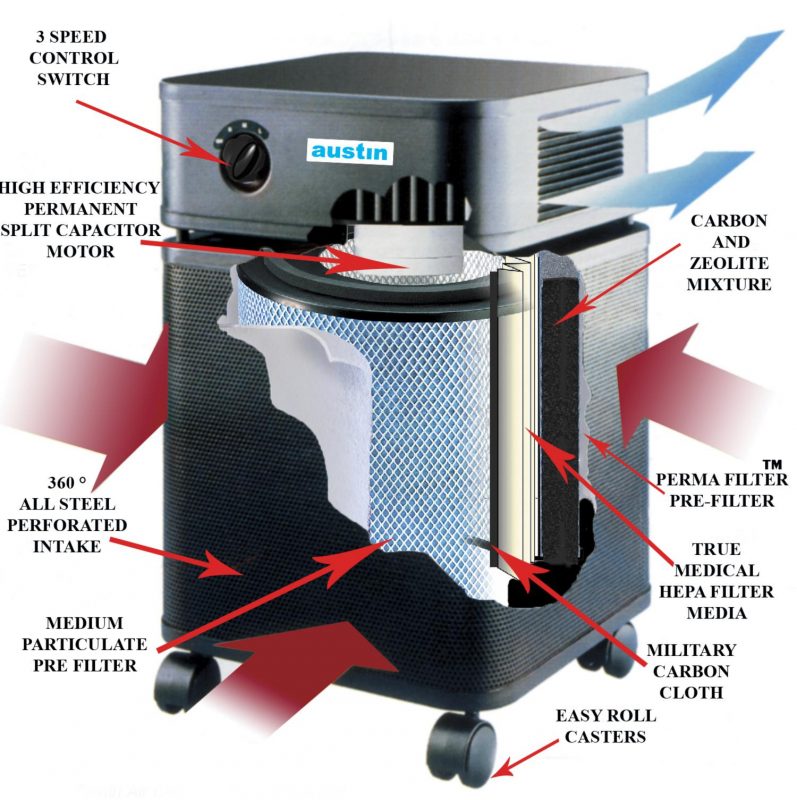
Let's say that you've looked all the way down to our Okay Stuff category, and checked out the coupons (top of this page), and you simply don't have it in your budget to upgrade to a safe mattress right now. Unfortunately, there's no way to wrap a mattress to protect yourself from VOCs. However, running a robust air filter will go a long way towards purifying your indoor air. This is the one I have in my bedroom, because while I do have a toxin-free mattress, I also have other furniture and rugs that aren't as clean. I love knowing that the air filter is mitigating the damage!
Sign up for our newsletter to be alerted when we publish or update Safe Product Guides. Thank you so much for reading!
Non-Toxic Mattress Certifications
Sorting through mattress certifications is maddening. Here's just some of why that is:
- First of all, not all certifications are created equal – some offer great assurance that your new mattress will be non-toxic, while others are essentially meaningless.
- What's more, just because a company shows a certification doesn't mean all of the material in that mattress is certified. One of our readers wrote to us about a mattress that contained Oeko-Tex 100 certified wool, but the company wouldn't confirm that they solely purchase the wool from this source. Thus, in this case it would be impossible to know if the mattress you're purchasing contains the certified wool or not (to say nothing of the other materials in this mattress).
- Sometimes, a mattress will claim to have a certification that they don't really have. One of the most common deceptive practices is when a manufacturer claims to have GOLS-certification for their latex mattress, and they even display the GOLS logo on their website. They might even show an actual copy of it on their website, complete with date and signatures. If, however, the certificate is not written to the same name as the manufacturer, it is not particularly meaningful. They are commonly written to a latex supplier out of Sri Lanka or India or South America. A certification written to an entity or person in Sri Lanka shows only that the latex was certified up to that point on its journey to becoming someone's bed. Between Sri Lanka and your bedroom, all sorts of things can (and do) happen to the latex to cause it to be more toxic than the certification implies.a mattress will claim to have a certification that they don't really have. One of the of the most common deceptive practices is when a manufacturer claims to have GOLS certification for their latex mattress, and they even display the GOLS logo on their website. They might even show an actual copy of it on their website, complete with date and signatures. If, however, the certificate is not written to the same name as the manufacturer, it is not particularly meaningful. They are commonly written to a latex supplier out of Sri Lanka or India or South America. A certification written to an entity or person in Sri Lanka shows only that the latex was certified up to that point on its journey to becoming someone's bed. Between Sri Lanka and your bedroom all sorts of things can (and do) happen to the latex to cause it to be more toxic than the certification implies.
 Best Non-Toxic Mattress Certifications
The two certifications to look for in your mattress are GOLS (for latex) and GOTS (for textiles). It's worth repeating: the best organic mattress brands that have these certifications have the certifications written directly to the mattress manufacturer.
To obtain a GOTS certification, at least 95% of the mattress must be made of certified-organic materials, and certain chemistries are prohibited entirely, even for that other 5%. These include polyurethane foam, heavy metals, formaldehyde, and the fire-retardants listed above. A GOTS certification on a mattress means that the entire manufacturing and distribution process is environmentally-safe and socially-responsible. If you are curious about a brand that we don't review in this guide, you can check for GOTS certification in the GOTS database.
One thing we love about GOTS certification is that in order to obtain it, a mattress must be produced in a facility that is also certified. This gives you extra peace of mind.
Similar to GOTS, a GOLS certification means that the mattress is made of at least 95% organic latex. Once again, the remaining 5% of the materials are also restricted in important ways.
 Good Non-Toxic Mattress Certifications
While Oeko-Tex Standard 100 doesn't require any organic materials to be used in a mattress, it does set limits for VOC emissions (such as formaldehyde). It also prohibits the use of dangerous flame-retardants and dyes.
Greenguard-certified mattresses have been tested, and are within limits, of certain VOCS, such as formaldehyde. Greenguard Gold has stricter standards than plain old Greenguard.
Okay Mattress Certifications
Organic Content Standard 100 just means that some of the ingredients are organic, but doesn't ban flame-retardants or other harmful chemicals.
CertiPUR was developed "by members of the global foam industry," although it does ban the use of some chemicals, such as PBDE flame-retardants and formaldehyde. It's important to know that CertiPUR does not certify an entire mattress, only the foam portion.
Sneaky Mattress Certification
NAOMI (National Association of Organic Mattress Industry) was created by Pure Rest Organics, which is a mattress company, so, it is in no way independent or third-party, obviously!
The Bottom Line on Non-Toxic Mattress Certifications
Most certifications are of SOME value, but they can be used sneakily by mattress manufacturers. Manufacturers may claim to have a certification that they don't actually have. So you really need to ask to see the actual signed certification, keeping in mind that if it's out of date, it's worthless. You also want to make sure that the entire factory that produces your mattress is certified free of toxins (particularly flame retardants), to guarantee that you don't have to worry about cross-contamination.
The Best Stuff

The following three brands have the top certifications that guarantee that their mattresses are free of all toxins. They also aren't owned by parent companies that pollute the environment by manufacturing toxic mattresses.
Soaring Heart Non-Toxic Mattress
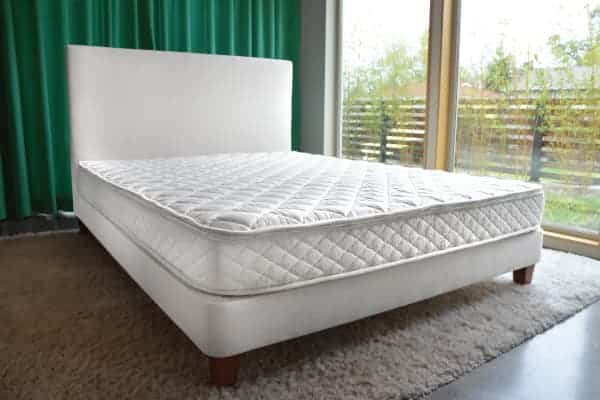
Based out of Seattle and in operation for almost 30 years, Soaring Heart hand-crafts most of their mattresses on-site and is one of the most transparent brands we've ever investigated.
Soaring Heart's latex mattresses are made of 100% organic latex. They have both GOLS and GOTS certification, written to Soaring Heart itself.
Soaring Heart mattresses contain no chemical fire retardants. Their latex passes flammability tests by using a combination of a tightly-woven, organic-cotton fabric-encasement, and is then wrapped in organic, felted-wool.
Soaring Heart offers organic crib mattresses and dog beds, too.
We loved Soaring Heart so much that we asked them if we could sell their mattresses! You can now buy Soaring Heart mattresses through our online store, and they ship free anywhere in the United States. I sleep on a Soaring Heart Zoned Mattress, my parents on a Soaring Heart Organic Latex Shikibuton, and we both have toppers. We are basically obsessed with these mattresses, and happy to talk you through their options. Just email John for help choosing.
Shop Soaring Heart
 Naturepedic Non-Toxic Mattresses
Black Friday Sale: 20% off plus free shipping.
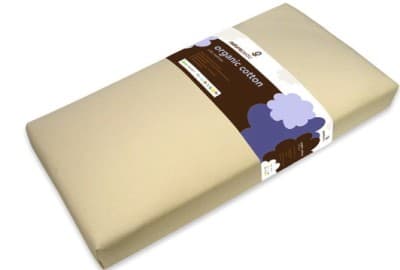
Naturepedic was founded by a grandfather named Barry when he could not find a non-toxic mattress for his grandson. These mattresses are now used by over 150 hospitals in the United States.
Naturepedic non-toxic mattresses are made of certified-organic cotton and a steel innerspring. They don't use any flame-retardant chemicals or barrier ingredients. Naturepedic includes a layer of polylactide, which is derived from sugarcane, in all of their mattresses to ensure they pass flammability tests. Since all Naturepedic mattresses are GOTS-certified, you can rest assured that the polylactide they use also passes GOTS standards. Polylactide is also Greenguard Gold certified.
The waterproof, crib mattress options use food-grade polyethylene for their outer layer (it acts as a moisture and vapor barrier).Naturepedic mattresses are available on their website. Adult mattresses mostly run in the $3,000-range, and crib mattresses from $259 to $399. Use code Gimme15 for 15% off everything on Naturepedic's site.
We offer Naturepedic crib mattresses and children's mattresses in our online store, and always appreciate your support!
Shop Naturepedic
Happsy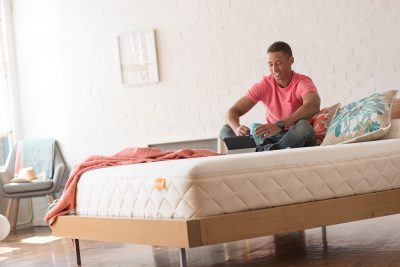
Black Friday Sale: $250 off with code BLACKFRIDAY250.
Happsy is the best organic mattress-in-a-box on the market, and comes with a 120-day trial period. Happsy is manufactured by Naturepedic, but is a more affordable option, while still getting high marks for comfort. When it's time to replace my kids' mattresses, this is the brand I plan to purchase.
Happsy is certified by GOTS, GOLS, and GreenGuard. Queens go for $1,400.
Use code GIMME225 for $225 off mattresses. (With this discount, Happsy is the most affordable Best Stuff mattress.)
Shop Happsy
The Good Stuff
The mattresses that we are calling, "The Good Stuff," make all the claims of safety and non-toxic materials and processes, but don't have all of the top-level certifications. Of course, this doesn't mean they actually have questionable materials in them, but simply that we can't be completely assured of their non-toxicity in the same way that we can for the stuff we have deemed The Best Stuff.
Avocado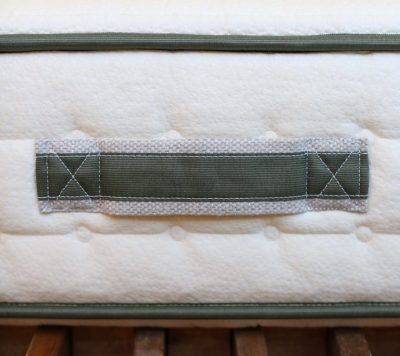
Black Friday Sale (ends Dec 6th): Save $225 on Hybrid and Latex mattresses with code SAVEBIG.
This newer brand has recently obtained both GOTS and GOLS certification, both written to Avocado itself. While we feel that Avocado is a great toxin-free mattress, we can't call it the Best Stuff because it is a subsidiary of Brentwood Home, which manufactures conventional mattresses. It's worth noting, however, that some of Brentwood's mattresses do have GOLS certification.
Shop Avocado
Bella Sera
This tiny company has some good certifications, including GOLS. Unfortunately it's not written directly to the company (but rather the foam manufacturer; you can see why this may be problematic by reading the "Certifications" section, above). They use wool as a flame retardant, which makes them Good Stuff rather than Okay Stuff.
CozyPure
CozyPure's mattresses skip all the flame retardants in favor of wool, which is significant. Unfortunately though, their GOLS certification isn't written directly to them, so I can't call this brand the Best Stuff.
Eco Terra
Black Friday Sale: $150 off mattresses with code BF150.
Eco Terra has OEKO-TEX certifications for their Talalay latex and wool. They don't use scary flame-retardants, just hydrated-silica, about which we have no significant concerns. 2021 update: Eco Terra now has an up-to-date GOTS certificate.
Shop Eco Terra
Holy Lamb Organics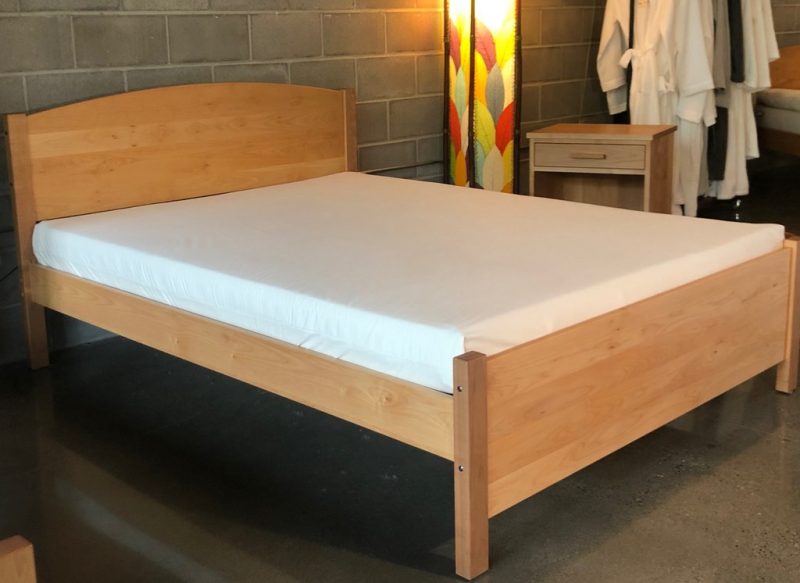
We love this brand – it has always produced only toxin-free mattresses. Because Holy Lamb is such a small business, they do not yet have GOLS certification, but they do have GOTS – and we will move them to Best Stuff as soon as the GOLS comes through. In the meantime, we still enthusiastically recommend this brand.
Shop Holy Lamb
Plush Beds
BLACK FRIDAY DEAL: $1,320 off mattresses and up to $549 in free bedding.
PlushBeds recently became fully-certified with top-level certifications, including GOTS, GOLS, GreenGuard Gold, and Oeko-Tex Standard 100.
PlushBed's Botanical Bliss and Luxury Bliss mattresses have all of the above certifications. Their Natural Bliss and Eco Bliss don't have GOLS certification, but are more affordable.
The only reason Plush is in our Good Stuff rather than Best Stuff category is because they make more conventional mattresses in addition to their fully-certified latex models. Nevertheless, Plush Beds' memory foam is the first to be certified by GreenGuard Gold, so if you must have a memory foam mattress (and we know a lot of you must!), then this is the way to go. Overall, everything Plush makes is reasonably toxin-free.
Use code GIMME100 to receive $100 off every order, in addition to whatever other deals are running.
Shop Plush Beds
 Savvy Rest
 Savvy Rest
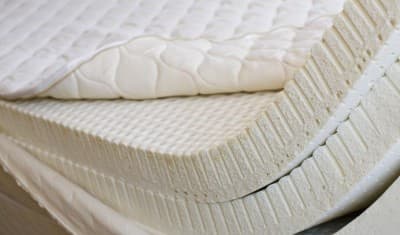
Savvy Rest is the non-toxic mattress we bought when I was pregnant, and we slept on it for six, comfortable years.
The latex used by Savvy Rest is 100% natural, and other materials used include certified-organic wool (which serves as flame-retardant) and cotton. Note that the Dunlop latex is organic, while the Talalay is not.
Savvy Rest mattresses have Oeko-Tex certification. (It's important to note that these certifications are for specific materials within the mattress, rather than the mattress itself; you can read more about this above.) Savvy Rest's GOTS certification is written in their name, and their GOLs certifications are written to their latex supplier (see above for more on certifications).
Visit Savvy Rest's website to see their wide-array of mattresses and learn more about all the materials they use. Our king-sized mattress cost around $3,500, but prices depend on which model you choose, in addition to the size you want.
Shop Savvy Rest Mattresses
 White Lotus
 White Lotus
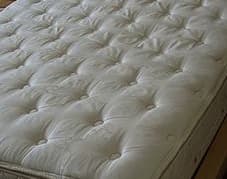
White Lotus sent along a big box of samples of all of their sumptuous. natural materials when I first reviewed them. They are one of our favorite brands to work with, and they have demonstrated a clear commitment to producing non-toxic mattresses.
White Lotus has a GOTS certification for their mattress materials, and they use some cool ingredients in their products, including:
- Kapok to stuff their mattresses. The "harvesting of the kapok pods provides jobs to indigenous people and helps maintain this vanishing ecosystem," according to the White Lotus website.
- Wholesale green cotton, which is totally unprocessed once harvested from the bolls – no bleaches, dyes, or fungicides.
- Wool, which is 100%-virgin, lamb's wool.
- Organic buckwheat hulls (for pillows).
- 100% natural latex (from rubber trees).
When I decided to get toddler Felix a new twin-sized, non-toxic mattress, I went with this White Lotus futon.
I do recommend that you avoid the Evergreen Foam used by White Lotus, which is a blend of "natural, oil-based foam" and conventional polyol, an alcohol used in the production of polyurethane. While off-gassing is heavily reduced and the environmental impact better than conventional foam, I don't consider this truly natural, toxin-free foam.
We have gotten to know the folks at White Lotus quite well, and we really trust the owner. Because White Lotus does not have GOLS certification written in its name, we classify it as Good Stuff rather than Best Stuff.
We now carry White Lotus mattresses and futons in our online store! If you don't see the model or size that you want, contact us and we will get it for you. Prices range from $1,100 to $2,490. Crib mattresses run from $470 to $825. Please note that we do not carry any White Lotus products with any of the questionable ingredients listed above – if you see it in our store, you know it's free of borate, toxic foam, and other synthetics.
Shop White Lotus Mattresses
(And here's a video I made on the difference between a mattress and a futon.)
The Okay Stuff
The brands we call "Okay Stuff" may have CertiPUR or other lesser certifications, and/or Talalay latex. Due to new laws, these mattresses probably do not have flame-retardant chemicals.
Awara
While Awara does not have GOLS or GOTS certifications, they do have CertiPUR.
Brooklyn Bedding
Black Friday Sale: 25% off with code: blackfriday25.
This company claims to have OekoTex certification, but failed to present proof to us of this. They do have CertiPUR certification (meaning at least the very worst flame-retardants won't be present in these mattresses).
Coco-Mat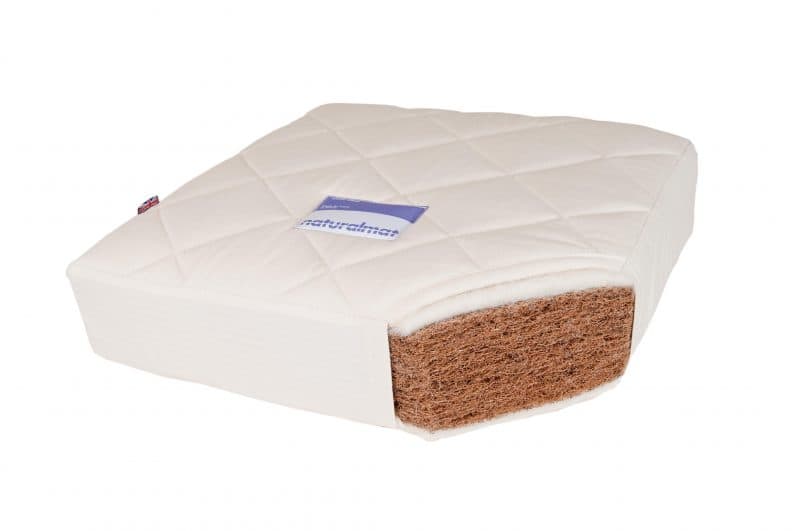
This brand uses all the right buzzwords to describe their mattresses ("non-toxic," "sustainable," etc.). Unfortunately, they are lacking somewhat in the certification department – although with digging we discovered they do carry the Oeko-Tex 100 certification. The big question mark for us is the "natural rubber" they use, which doesn't have any certification. Still, that Oeko-Tex 100 certification means something, and they don't use PBDE flame retardants.
Essentia
 Black Friday Sale: 25% off and two free organic pillows with every mattress order.
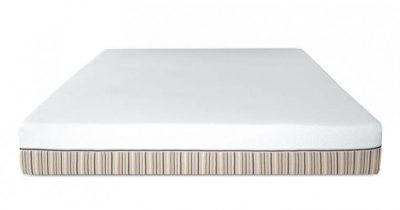
We field a ton of questions about Essentia from people who love memory foam and want a safer option. Standard memory foam (made of petroleum derivatives) is decidedly toxic, and I've long suspected Essentia of being Sneaky stuff. After researching Essentia thoroughly for a recent client, I came away (still reluctantly!) recommending them as Okay Stuff, although I do still have a few reservations. They use a proprietary flame retardant in their foam, which involves Kevlar – a material that is not remotely natural, but which appears to be non-toxic, based on current research available. Kevlar is a type of plastic, however, and you probably know, I don't love plastic, period!
I spoke to the people at Essentia, and they sent me the independent-testing results for their mattresses — I saw no red flags and everything checked out as non-toxic. They also have a number of certifications, some of which are more legit than others. There is always a chance that sneaky manufacturers might hide things under the "trade secret" laws, but I didn't learn anything from Essentia that suggests that they are doing so. I personally will continue to buy our mattresses from manufacturers who use wool as a flame retardant, but if you want a memory foam mattress, this is your best bet!
Shop Essentia
Hastens
These super-expensive mattresses are very comfortable and contain no foam; they also carry the Oeko-Tex Standard 100 certification. The price puts them out of range for most people: starting at $10,000. Hastens mattresses go up to a whopping $99,000! Hastens does use steel springs in their mattresses, which some folks would prefer to avoid for the reasons listed above.
Natural Mat
This brand appears to be made of all the Good Stuff and none of the bad, but doesn't come with any certifications proving this. They do use wool for flame protection, which is a plus.
Obasan
Obasan does not have the top, independent, third-party certifications for their latex mattress cores.
SleepOnLatex
This brand does not have GOLS certification, but does have Oeko-Tex, and doesn't use the most dangerous flame retardants.
Tuft & Needle
The certifications for these mattresses fall short of Good Stuff – they have GreenGuard Gold, OEKO TEX, and CertiPUR.
Vivetique
This company claims to have Oeko-Tex and the GOTS certifications, but have been unable to provide us with proof. Furthermore, one of our readers recently called us to relay a frustrating experience with Vivetique. Their website is somewhat maddening to navigate, too.
The Bad Stuff
It's safe to assume that all conventional mattresses contain petrochemicals and that many are treated with toxic flame retardants of one kind or another.
Joybed is a brand that a lot of you have asked about. Unfortunately, it has no certifications of any kind and therefore can't be considered for our recommendation.
IKEA mattresses are tempting because they are cheap. But they have no certifications of any kind, and had this to say about the use of fire-retardant chemicals: In our adult mattresses, mattress pads, and mattress sets a fiber fire-barrier made of rayon/polyester-batting is used that has an inherently fire-resistant property. Flame-retardant chemicals (phosphorous-based inorganic salts) are only used for some stitch-bond and zippers.
IKEA children's mattresses sold in the U.S. have a fiber-mix barrier as described above. The fiber-batting is quilted into the mattress cover and is not treated with any flame-retardant chemicals. (Note from Maia: So the crib mattresses are at least free of all fire-retardants!).
Sealy mattresses contain vinyl, undisclosed fire retardants ("trade secret"), polyurethane, polyethylene, and nanoparticles. This includes the mattresses they make for children.
Simmons is the same as Sealy.
Newton Wovenair.The polymer this mattress is made from appears to be fine, but the cover is made of polyester (this doesn't pose a real health risk, but is not environmentally-friendly and a form of plastic). Newton uses phosphate flame-retardants. This is better than bromated or chlorinated, but still should be avoided if possible.
Tempurpedic mattresses are wildly popular… and wildly toxic. "Memory foam" is made of inexpensive polyurethane, and you'll notice that a brand-new Tempurpedic is smellier than most other mattresses – this is because it's off-gassing more. The fire retardant used on Tempurpedics is NOT PBDE, but they do not disclose what it is. The Environmental Protection Agency has also raised concerns about emissions formed during the production of polyurethane foam products, which include methylene chloride and other hazardous chemicals.
The Sneaky Stuff
Colgate's "eco" crib mattresses claim to be made of "the finest non-toxic materials in the marketplace." In reality, Colgate mattresses contain vinyl and polyurethane.
Casper. These popular, inexpensive mattresses contain a top latex layer that is Oeko-Tex certified, but I'm not crazy about the memory foam component (which is not certified and contains polyurethane). The flame retardants seem pretty safe: "A fire-retardant, knit-sock covers the foam before the outer-cover is placed on the mattress. The knit sock is made from a proprietary-yarn with a silica core and a polyester/acrylic/nylon/rayon outer-wrap. The knit-sock is made without any toxic chemicals and each component is OEKO-TEX® certified." However, the latex in the lower layers is not 100%-natural, but rather a blend, and synthetic latex can be very toxic when made from carcinogenic-styrene. Readers who have purchased a Casper mattress have complained of the smell and sore throats.
Eco Dream mattresses are basically just memory foam mattresses that don't even make claims of non-toxicity!
IntelliBED claims to be non-toxic, and is heavily-promoted by natural parenting bloggers. The only certification they have received is the dubious CertiPUR. They claim that they use a soy-based foam, but companies can make this claim when the mattress contains only a small percentage of soy foam (the rest being petroleum-derived polyurethane), and IntelliBED gives no specifics about their foam.
Keetsa mattresses (which are manufactured in China), are described by many retailers as "natural" or "green." The company is, in fact, pretty transparent, and clearly states that, "Keetsa's mission is to deliver a comfortable, affordable, and durable mattress in an eco-friendly manner. We are not producing organic or natural mattresses. By replacing some of the petroleum product with cedar oil and introducing green tea extract into the mixture, we have created a foam that is less toxic, and has a less-offensive odor than traditional foam. We also utilize sustainable materials, such as bamboo, in our cover materials."
Layla, like so many others, is a memory foam mattress with only a CertiPUR certification.
Moonlight Slumber set off an alarm for me right away with their bogus certification: "Green Safety Shield" is their own certification, and is not third (or even second!) party. They do have testing that shows no VOCs from their mattresses, but that's only one issue of concern. I'm more worried about their "Visco foam," whatever that is! They do have a CertiPUR certification program, but this is from a polyurethane industry group. Finally, their flame retardant is proprietary, although they claim it's natural and free of chemicals.
Natura World mattresses may contain (depending on the model you select) boric acid and fiberglass flame-retardants, petroleum-derived latex (as in, not the kind from rubber trees), and nanoparticles. The organic model may be safe, but I don't have enough information at this point to know for sure.
NECTAR has CertiPUR certification and is free of PBDEs. In other words, nothing about this mattress is particularly non-toxic, but it's better than a standard mattress.
Nest Bedding says that they are a "Organic, Natural, and Certified Bedding and Mattress Company," but they, too, rely on only CertiPUR certification
Nookcrib mattresses fail to show independent certification. I also don't love that their mattresses contain plastic (PETE, which is among the safer types of plastic, but plastic nonetheless!). They claim to use wool as a flame retardant, but one of our readers had the foam tested in her Pebble Lite model and it tested positive for flame retardants!
Purple mattresses don't have any of the certifications we look for even for our Okay Stuff category. Purple has CertiPUR, but nothing more.
Saatva and their sister company Loom & Leaf are memory foam mattresses with only CertiPUR certifications. They use only about 30% "plant-based foams." The rest is petroleum-based.
The Sealy Naturalis mattress has an organic-cotton layer; unfortunately, it is surrounded by a vinyl cover.
Swiss Dreams mattresses appear to have exactly zero certifications, making it impossible to back up any of their claims of non-toxicity.
YogaBed doesn't even really make any claims of non-toxicity, but I'm calling it Sneaky Stuff. Anything with "yoga" in the name is trying to project a green image, don't you think?
ZenHaven is just another mattress company jumping on the greenwashing bandwagon, and they have no certifications. This is not a non-toxic mattress.
Don't Be Fooled By:
- Natural latex. Petroleum comes from the earth, so petroleum-based mattresses can be "natural." A "natural latex mattress" may only contain only 50% natural latex and may be blended with polyurethane foam and treated with VOCs. Look for mattresses that specify that they are made from 100%-natural latex.
- "All-natural wool" or "pure wool" or "eco-wool." Unless wool is certified organic, it is likely processed conventionally with a variety of chemicals. You may or may not be okay with this (I feel that the flame-retardants are more concerning). In some cases, a wool producer may not bother with organic certification, despite organic practices.
- Biofoam. Soy- or plant-foam is still made of mostly polyurethane; Biofoam mattresses typically contain less than 20% plant material.
- Certifications. Oftentimes, these certifications apply only to certain parts of the mattress, not necessarily the mattress as a whole. In some cases the mattress company creates its own certification. You can read more about this in the section on certifications, above.
- Most of all, remember that there is a lot of deceptive marketing in the mattress world and it is not illegal to throw around terms like "natural," "green," and even "organic" without actually having to prove it
Less Expensive Ways to Sleep Safely
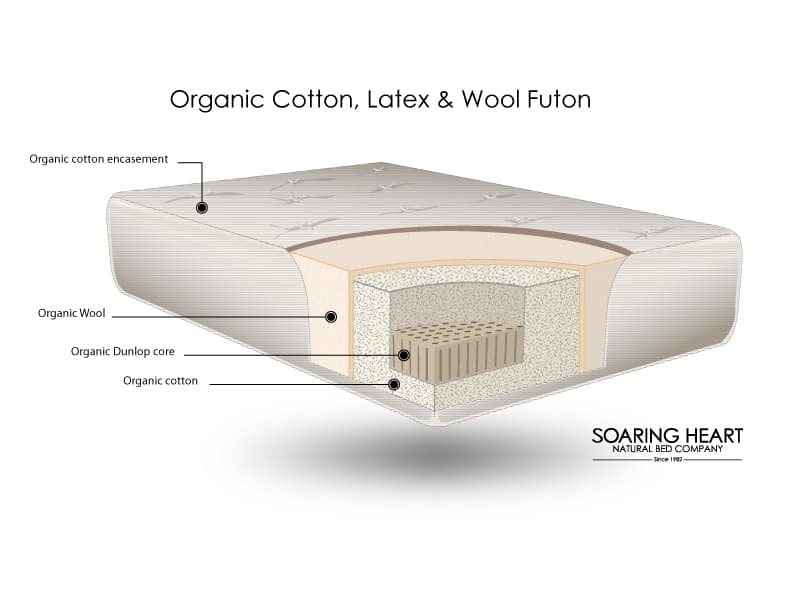
Do you want to co-sleep with your baby, but don't want to buy a new mattress? Consider a futon as an alternative to an expensive, non-toxic mattress. They are much more comfortable than they were in your childhood, and I love the ones by Soaring Heart in particular. (Conventional or Sneaky futons will be loaded with all the same scary chemicals as mattresses.)
Here's where I explain the difference between a mattress and a futon:
If you liked this post, sign up for our newsletter to be alerted when we publish new content like this!
How Much Money Does The Coca Cola Compant Make
Source: https://gimmethegoodstuff.org/safe-product-guides/mattresses/
Posted by: lopezothapprocy.blogspot.com
0 Response to "How Much Money Does The Coca Cola Compant Make"
Post a Comment